
Personal Growth and
Life Transitions at
Pathway Therapy

Life transitions whether they arrive gradually or all at once often bring a mix of uncertainty, hope, disruption, and possibility. These periods can challenge a person’s sense of identity, stability, and direction, while also opening the door to meaningful personal growth. Our work offers a steady, compassionate space where clients can slow down, reflect, and understand what these changes are asking of them. We support people in exploring the emotional impact of transition, recognising old patterns that may be resurfacing, and reconnecting with the strengths, values, and inner resources that help them move forward. Personal growth becomes a natural part of this process: clients begin to deepen their self‑awareness, clarify what truly matters, and develop healthier ways of relating to themselves and others. Together, we look at identity shifts, evolving roles, and the practical realities of navigating new chapters, helping clients build confidence, emotional balance, and a grounded sense of purpose. Through gentle guidance, reflective conversations, and practical tools, we walk alongside clients as they move through uncertainty, embrace change at their own pace, and cultivate a more authentic, resilient, and empowered version of themselves.

Common areas we support:
-
Feeling stuck or unsure during major life changes such as career shifts, relationship transitions, or new roles.
-
Anxiety or overwhelm linked to uncertainty, decision making, or fear of the unknown.
-
Loss of confidence after setbacks, burnout, or unexpected changes.
-
Difficulty adjusting to new responsibilities or identities (parenthood, retirement, returning to education, moving home).
-
Emotional fatigue or grief that can arise when old chapters close and new ones begin.
-
Desire for personal development such as improving boundaries, communication, self esteem, or life balance.
What is Personal Growth and
Life Transitions?
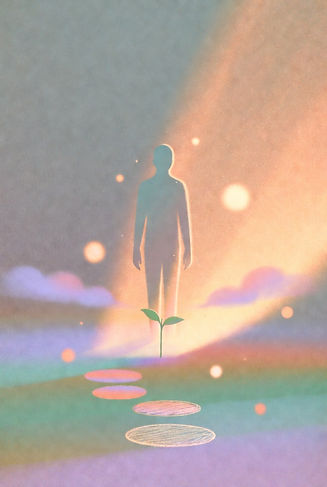
Personal growth and life transitions are the natural shifts we move through as we evolve changes in identity, relationships, roles, values, or direction. They’re not signs that something is wrong; they’re signs that you’re human. Growth often begins when something no longer fits: a job, a relationship dynamic, a belief about yourself, or a way of coping. Transitions can feel exciting, overwhelming, disorienting, or all of these at once, because they ask you to step into the unknown while letting go of what’s familiar.
Life transitions can include starting or ending relationships, becoming a parent, career changes, moving home, grief, health changes, identity exploration, or simply realising you want something different from your life. In adults, these shifts often show up as uncertainty, self‑doubt, emotional ups and downs, or a sense of being “in between versions” of yourself. Many people assume they should handle transitions smoothly, but the truth is that growth is rarely linear. And within these periods of change, people often discover strengths like adaptability, courage, creativity, and a deeper understanding of who they are becoming.
At Pathway Therapy, we view personal growth and life transitions as meaningful turning points rather than crises. The goal isn’t to rush through change, but to understand it, honour it, and move through it with intention. Therapy supports you in navigating uncertainty, clarifying your values, strengthening self‑trust, and building a life that feels aligned with who you are now not who you used to be. You don’t have to navigate these shifts alone—we walk with you as you grow, transform, and step into your next chapter with confidence and compassion.